

What Causes Winter Heat Leaks in Maricopa County Homes?
Winter heat leaks in Maricopa County homes occur when extreme diurnal temperature swings, often dropping 30°F to 40°F between day and night, cause legacy single-pane glass and rigid aluminum or aged wood window frames to contract rapidly. This thermal contraction breaks perimeter exterior seals, opens microscopic gaps along stucco return joints, and drives severe radiant heat loss. Custom Deluxe Windows’ Maricopa County custom windows keep that from happening.
Upgrading to precision-engineered, multi-chambered vinyl windows with Low-E glass stops thermal transfer, stabilizes interior temperatures, and lowers seasonal HVAC energy loads across the Sonoran Desert.
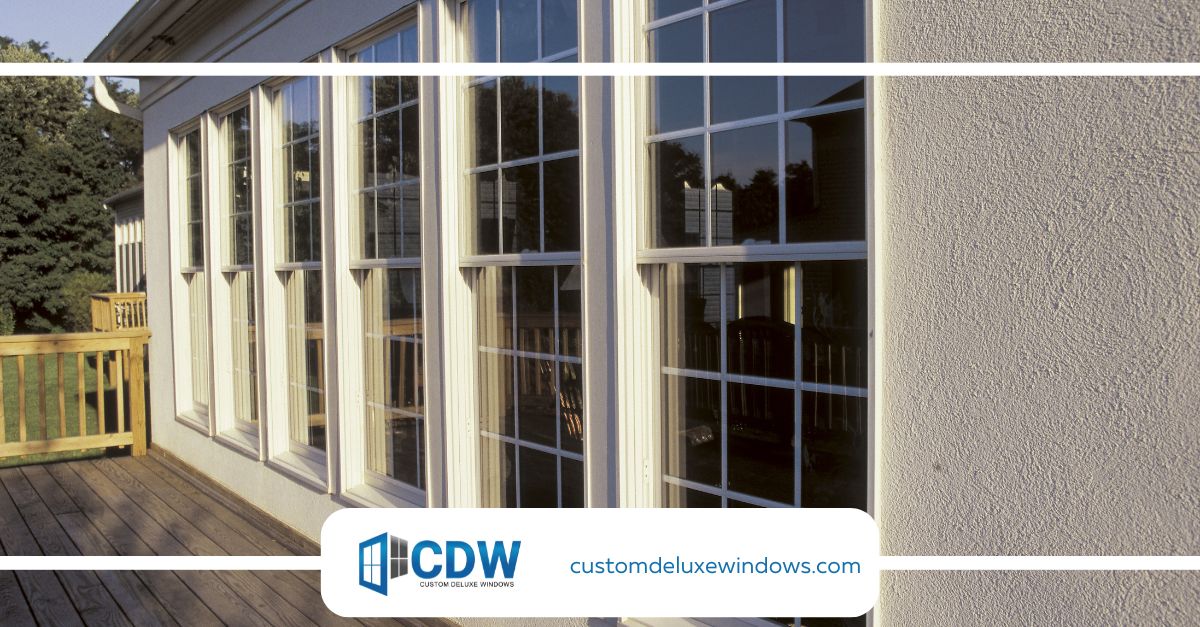
Detecting Winter Drafts and Thermal Seal Failures in Sonoran Desert Homes
Upgrading your home with custom replacement windows in Maricopa County begins with understanding how extreme seasonal and daily temperature swings compromise older window units over time.
While Valley of the Sun homeowners routinely focus on extreme summer cooling demands, sharp winter night drops across Phoenix, Mesa, Chandler, and Gilbert cause aged aluminum and wood window frames to contract rapidly. This rapid thermal movement pulls frames away from surrounding building envelopes, opening microscopic gaps that bleed indoor heat directly into the desert air.
Utilizing targeted thermal detection techniques around window perimeters quickly reveals hidden cold air drafts, demonstrating exactly where thermal seal failure is driving up winter heating expenses.
Indicators of Window Envelope Breakdown:
- Thermal Camera Inspections: Infrared imaging highlights immediate cold air intrusion around deteriorating glass edges, sash corners, and frame tracks.
- Smoke Pencil & Candle Testing: Pinpoints exact draft paths created by cracked exterior caulking, dry-rotted weatherstripping, or failed sashes.
- Single-Pane Radiant Heat Transfer: Legacy single-pane glass lacks thermal resistance, forcing home heating systems to run continuously during chilly desert nights.
- Differential Frame Contraction: Temperature drops cause rigid aluminum frames to shrink faster than surrounding concrete or stucco, shearing perimeter seals.
- Escalating Utility Bills: Unchecked perimeter leakage drives up monthly natural gas and electric heating charges from regional utility providers like APS and SRP.
Evaluating physical window perimeter degradation allows residents across Scottsdale, Tempe, and greater Maricopa County to pinpoint structural leaks early:
Custom Replacement Windows vs. Stock Off-the-Shelf Units
Investments in custom replacement windows resolve structural heat leakage by replacing worn single-pane units with engineered barrier systems. Custom Deluxe Windows’ manufacturing process ensures each frame fits exact rough openings, eliminating cold air penetration around perimeter stucco or siding.
| Feature / Metric | Legacy Aluminum / Wood | Stock Big-Box Vinyl | Custom Deluxe Engineered Vinyl |
|---|---|---|---|
| Sizing Tolerance | Standard gaps filled with thick caulk | Fixed 1/2″ increments (requires shims) | Precision fit within 1/16″ of rough opening |
| Frame Thermal Break | None (Highly conductive metal/wood) | Basic hollow profile | Multi-chambered uPVC with internal air pockets |
| Corner Construction | Mechanical screws & brackets (Loosens) | Chemically glued / Light weld | 100% Fusion-welded structural corners |
| UV Resistance Rating | Low (Fades, cracks, warps under desert sun) | Moderate (Prone to chalking over time) | Titanium Dioxide (TiO2) enriched uPVC |
| Glass Package | Single-pane 1/8″ annealed glass | Dual-pane standard Low-E | Spectrally Selective Low-E 366 + Argon Gas |
| Dust & Wind Resistance | Single flap weatherstripping | Standard felt seals | Multi-point compression bulb weatherstripping |
| Stucco Retrofit Fit | Requires tearing out exterior stucco | Generic flush fin (Gaps require excessive foam) | Precision engineered Flush-Fin Stucco Retrofit |
Deflecting Desert Thermal Loads with Spectrally Selective Low-E Dual-Pane Glass
Integrating advanced custom window manufacturing standards provides year-round thermal defense against Arizona’s demanding atmospheric conditions. Outdated single-pane windows lack the insulation required to hold conditioned air inside your living space during winter evenings or scorching summer afternoons.
Custom Deluxe Windows engineers high-performance vinyl units designed specifically to reflect cold winter drafts away in January while bouncing destructive infrared solar heat back during summer peak rate hours.
How Does Spectrally Selective Low-E Glass Work in Desert Climates?
Spectrally selective Low-E (Low-Emissivity) glass utilizes microscopic, multi-layered silver coatings that filter the solar spectrum. It reflects invisible heat-causing infrared rays and destructive ultraviolet (UV) radiation away from the home while allowing clean visible daylight to pass through. In winter, these same coatings reflect interior radiant heat back inside, drastically reducing heat loss through the window surface.
Advanced Thermal Barrier Components of Proper Maricopa County Custom Windows
- Dual-Pane Insulated Glass Units (IGUs): Sealed double-glass assemblies create an insulating air space that restricts conductive thermal transfer by more than 50% compared to legacy single-pane windows.
- Dense Argon Gas Infill: Colorless, non-toxic argon gas injected into the IGU cavity acts as a dense thermal cushion, slowing convective currents between glass panes far more effectively than air.
- Warm-Edge Spacer Systems: Advanced composite spacer materials separate glass sheets while absorbing expansion and contraction stresses caused by daily desert heating cycles.
- Spectrally Selective Coatings (Low-E 366): Specialized coatings minimize the Solar Heat Gain Coefficient (SHGC) down to 0.20–0.22, exceeding Energy Star guidelines for the Southwest region.
- Heavy-Duty Weather Seals & Locking Hardware: Multi-point locking mechanisms pull sashes tight against continuous bulb seals to eliminate high-velocity wind infiltration.

Sealing Out Dust Storms and Preventing UV Frame Warping Across the Valley
Choosing precision-fitted Maricopa County custom windows protects home interiors against severe desert dust storms and intense solar radiation. Seasonal haboobs routinely drive fine sand, dust, and pollen through deteriorating window tracks and worn weather seals. Custom Deluxe Windows manufactures uPVC vinyl frames equipped with multi-point weatherstripping to create an airtight seal that safeguards indoor air quality across Scottsdale, Mesa, Chandler, Phoenix, and Gilbert.
Hyper-Local Microclimates & Regional Considerations:
- The Phoenix Metro Heat Island: Nighttime temperatures in urban core areas stay elevated due to thermal mass in concrete, placing continuous 24-hour demand on building envelopes.
- East Valley Wind Corridors (Mesa, Gilbert, Queen Creek): Open terrain exposes window assemblies to higher wind velocities during monsoon season, demanding robust sash structural ratings (DP ratings).
- High UV Solar Exposure: Unshielded Arizona sunlight bakes window frames with intense ultraviolet radiation, breaking down inferior vinyl or painted wood unless engineered with protective titanium dioxide additives.
- Stucco Wall Integration: Valley homes predominantly feature exterior stucco. Precision flush-fin installation techniques allow seamless retrofits without damaging or cracking surrounding stucco finishes.
Frequently Asked Questions About Maricopa County Custom Windows
Why do windows leak cold air during Sonoran Desert winters?
Windows leak cold air during Sonoran Desert winters primarily due to thermal contraction. Severe night drops cause legacy aluminum frames to shrink away from surrounding stucco and wall assemblies, opening gaps. Additionally, single-pane glass lacks insulating properties, causing interior heat to rapidly radiate outward while drawing cold air inward around aging, cracked weatherstripping.
How do custom replacement windows fit into existing stucco exteriors without damaging the wall?
Custom replacement windows designed for Arizona homes use specialized “flush-fin” or “Z-bar” retrofitting frames. The old window sashes and inner aluminum frames are carefully removed while leaving the original perimeter flange embedded in the stucco undisturbed. The new custom frame slides precisely over the existing opening, sealing completely against the original structure with heavy-duty elastomeric sealants for a weather-tight finish that leaves exterior stucco completely intact.
What Solar Heat Gain Coefficient (SHGC) rating is recommended for Maricopa County?
For Maricopa County and the broader Sonoran Desert region, energy standards recommend an SHGC rating of 0.25 or lower. Glass packages featuring spectrally selective Low-E 366 coatings routinely achieve SHGC ratings around 0.20 to 0.22, blocking up to 80% of incoming solar heat while maintaining daylight transmittance.
How can I tell if my dual-pane window seals have failed?
Perimeter thermal seal failure in a dual-pane glass unit is indicated by visible condensation, fogging, or a cloudy film trapped between the two panes of glass that cannot be wiped away from either side. This occurs when the factory seal breaks, allowing moisture-laden air to enter the internal cavity and deplete the insulating argon gas fill.
Do custom vinyl windows warp under extreme summer temperatures in Phoenix?
Standard or low-grade vinyl can warp, bow, or chalk under Phoenix solar exposure. However, high-performance custom vinyl windows engineered for desert environments are formulated with heavy concentrations of Titanium Dioxide (TiO2). This heat-stabilizing compound reflects solar UV rays, resists high heat deflection temperatures, and prevents frame deformation or color fading even in extreme desert heat.
How much can high-efficiency custom windows save on utility bills in Maricopa County?
Replacing single-pane aluminum windows with ENERGY STAR certified custom vinyl dual-pane windows can lower annual heating and cooling costs by 15% to 30%. By reducing HVAC runtimes during summer peak electricity hours (SRP and APS time-of-use plans) and keeping heat inside during winter nights, homeowners see immediate reductions in monthly energy expenses.