

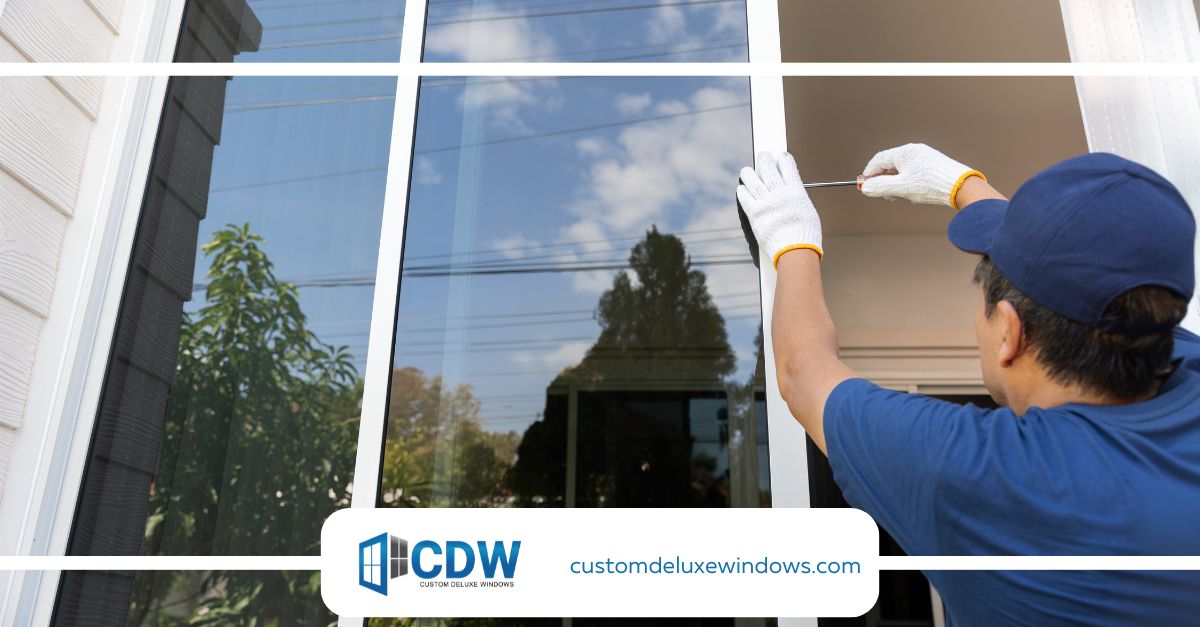
The clear window replacement signs include inter-pane glass fogging (indicating argon gas leak and thermal seal failure), sticky or warped window sashes, perimeter thermal drafts, stucco boundary water leaks, elevated APS/SRP utility bills, and excessive solar heat gain. When these signs manifest, replacing window units restores energy efficiency, seals the building envelope, and protects interior structural framing.
What Are the Window Replacement Signs Every Homeowner Should Watch For?
Residential glass fixtures serve as the primary protective envelope separating indoor living spaces from harsh external environments. In extreme desert and southwestern climates, where summer ambient temperatures routinely cross 115°F and monsoon storms exert severe wind-driven pressure, window systems face unprecedented thermal and mechanical stress.
When window performance deteriorates, residential structures experience severe thermal loss, compromised building envelopes, high cooling expenses, and perimeter rot.
Identifying key window replacement signs early allows property owners to address vulnerabilities before high power bills and hidden dry rot inflict permanent damage on household finances and structural substrates.
Inter-Pane Condensation, Glass Fogging, and Seal Failure
Evaluating glass clarity provides immediate insight into internal seal integrity. Modern energy-efficient homes rely on Insulated Glass Units (IGUs). Those are hermetically sealed dual-pane or triple-pane chambers filled with dense argon gas to impede convective heat transfer between exterior heat and interior air.
What causes foggy windows and moisture between glass panes?
Moisture between glass panes is caused by dual-pane thermal seal failure. Continuous UV exposure and severe temperature fluctuations break down perimeter adhesive sealants, causing argon gas to leak out.
Atmospheric humidity then enters the insulated chamber; as it undergoes evaporation and condensation cycles, it leaves permanent, un-wipeable alkaline deposits and fogging inside the glass unit.
When perimeter seals degrade, gas loss accelerates rapidly, destroying the window’s insulating capability.
- Dual-Pane Seal Failure: Continuous solar radiation degrades perimeter silicone and butyl adhesive bands, opening micro-fissures in the seal.
- Inter-Pane Condensation: Trapped humidity forms moisture beads inside the sealed unit that cannot be wiped clean from inside or outside the home.
- Desiccant Saturation: Internal desiccant material embedded in the spacer bars reaches total moisture capacity, causing internal fogging.
- Argon Gas Thermal Leakage: Dissipation of dense argon or krypton gas allows external heat energy to transfer directly into the living room.
- Distorted View Glass: Loss of internal pocket pressure causes glass panes to flex inward, distorting external visual reflections.
Frame Warping, Sticking Sashes, and Perimeter Air Drafts
Structural frame stability directly affects sash movement, locking alignment, and air infiltration rates. In regions governed by extreme heat cycles, sub-standard frame materials expand, contract, and twist out of the true square, creating severe operational drag along balance tracks.
Operational and Thermal Performance Metrics
| Performance Metric | Aging/Defective Window | High-Performance Vinyl Custom Window |
|---|---|---|
| Air Infiltration Rate (cfm/ft²) | ≥ 0.30 cfm/ft² (Drafty)[cite: 18] | ≤ 0.04 cfm/ft² (Airtight)[cite: 18] |
| Solar Heat Gain Coefficient (SHGC) | 0.65 – 0.85 (High heat transfer)[cite: 18] | ≤ 0.20 (Optimized for desert sun)[cite: 18] |
| U-Factor (Btu/h·ft²·°F) | 0.50 – 1.10 (Poor insulation)[cite: 18] | ≤ 0.26 (Superior thermal barrier)[cite: 18] |
| HVAC Compression Burden | Continuous high-load cycles[cite: 18] | Reduced load; up to 30% lower runtime[cite: 18] |
| Frame Dimensional Stability | Expands/warps under thermal shock[cite: 18] | Engineered vinyl resists twisting/binding[cite: 18] |
Physical resistance during opening or closing operations indicates that window frames no longer hold true square dimensions. Gaps along sash contact points break the continuous air seal, causing ambient thermal drafts and forcing HVAC compressors to work overtime, driving up monthly APS and SRP utility bills.
Water Intrusion, Stucco Cracking, and Exterior Frame Rot
Exterior interfaces require absolute perimeter envelope integrity to prevent wind-driven rainwater from infiltrating surrounding wall cavities. Southwestern monsoon events deliver sudden, high-velocity rainfall against exterior stucco borders, searching out every micro-gap.
- Stucco Perimeter Cracking: Differential thermal expansion between window frames and exterior stucco separates perimeter sealant joints.
- Monsoon Water Intrusion: Water migrates behind interior sills, causing paint bubbling, drywall softening, and hidden mold propagation inside shear walls.
- Dry Rot in Substrates: Prolonged dampness rots wood bucks, trim, and wall framing, compromising structural support and inviting subterranean termite colonies.
- Haboob Dust Infiltration: Fine desert silt blows through degraded weatherstripping, leaving dust trails on window sills and interior sashes.
- Flush-Fin Retrofit Solutions: Specialized vinyl replacement units feature flush-fin frames that overlap existing exterior stucco without damaging original exterior wall integrity, creating an impenetrable moisture and dust barrier.
Solar Radiant Heat Penetration and Interior UV Fading
Unprotected single-pane glass or non-coated dual-pane windows allow high levels of infrared (IR) and ultraviolet (UV) radiation into residential interiors. Solar radiation directly heats interior flooring, air spaces, and furnishings.
How do outdated windows impact home cooling bills?
Outdated single-pane or non-coated dual-pane windows allow over 75% of solar heat energy to pass directly into living spaces according to the DOE. This extreme solar heat gain elevates internal temperatures along south- and west-facing elevations, forcing home air conditioning units to run continuously during peak billing hours and significantly increasing monthly electricity costs.
Window Solar Protection Mechanics
- UV Radiation Blockade: Low-E (low-emissivity) glass coatings filter out damaging shortwave UV rays, protecting hardwood floors, artwork, and furniture from fading.
- Infrared (IR) Reflectance: Spectrally selective coatings reflect invisible radiant heat back toward the exterior, keeping ambient glass cool to the touch during peak afternoon hours.
- Zone Temperature Balancing: Eliminates localized “hot spots” in west-facing bedrooms and living areas, allowing unified home climate control.
Acoustic Leakage and Traffic Noise Penetration
Window assemblies are a home’s primary defense against airborne noise frequencies. Outdated single-pane windows or loose-fitting double-hung sashes offer minimal acoustic insulation, permitting street traffic, lawn equipment, and neighborhood noise to disrupt interior peace.
Upgrading to modern custom vinyl windows with varied glass thicknesses (dissimilar glass assemblies) disrupts harmonic sound waves, dampening external ambient noise.
Single-Pane Vulnerabilities and Modern Safety Standards
Older residential neighborhoods often feature legacy single-pane annealed glass fixtures. These units present serious thermal inefficiencies and significant security and physical safety hazards.
- Annealed Glass Shattering: Standard glass breaks into large, razor-sharp shards upon impact, posing extreme risks near high-traffic patio exits, walkways, and low sills.
- Sub-Standard Home Security: Weary, single-point latching hardware allows easy manipulation from the exterior, making homes vulnerable to forced entry.
- Code Non-Compliance: Outdated installations lack tempered safety glass required by modern IRC building codes within 24 inches of door openings or within 36 inches of swimming pool perimeters.
- Frame Instability: Structural integrity weakens over time, permitting frame flexing during high-velocity desert windstorms.
Modern custom vinyl replacement windows combine heavy-duty multi-point locking systems with tempered impact glass, delivering enhanced home security, code compliance, and structural resilience.
Frame Maintenance Costs vs. High-Performance Vinyl
Legacy wood and aluminum window frames demand ongoing maintenance to survive harsh weather conditions. Metal frames pit, corrode, and transfer heat rapidly, while painted wood frames peel, absorb moisture, and warp.
Transitioning to engineered vinyl replacement windows eliminates recurring maintenance expenses. Premium vinyl compounds remain immune to rot, corrosion, peeling, and chipping, delivering long-term structural integrity and aesthetic appeal.
Frequently Asked Questions About Window Replacement Signs
How do I know if my window seals are broken?
You can tell a window seal is broken if you notice permanent fogging, hazing, or moisture droplets trapped between the dual glass panes that cannot be wiped clean. Other signs include visible distortion in the glass reflection and a sudden increase in room draftiness or heat transfer near the window.
What is the average lifespan of residential vinyl windows?
High-quality custom vinyl replacement windows engineered with UV-stabilized formulations typically last between 20 and 30 years. Lifespan depends on thermal exposure, window installation precision, and structural building movements.
Can single-pane windows be repaired, or should they be replaced?
While individual single-pane glass can be re-glazed, replacing single-pane windows with modern dual-pane Low-E vinyl windows is strongly recommended. Replacement significantly lowers monthly cooling and heating costs, enhances home security, reduces noise, and brings the property up to modern building safety codes.
What is a flush-fin window replacement, and why is it used on stucco homes?
A flush-fin (or z-bar) window replacement is a specialized installation design created for homes with existing exterior stucco or masonry finishes. The replacement frame slips inside the existing frame opening and features an oversized exterior fin that overlaps the exterior stucco border. This creates a watertight, airtight seal without requiring costly, destructive stucco demolition.
Will replacing windows lower my summer electric bills?
Yes. Upgrading from leaky single-pane or failed dual-pane windows to energy-efficient windows featuring Low-E coatings, argon gas fill, and airtight vinyl frames can reduce cooling energy demand by up to 20% to 30% during summer months, directly lowering monthly APS and SRP utility bills.