
Buying replacement windows direct from the manufacturer bypasses dealer markups, third-party sales commissions, and distributor delays. Homeowners work directly with factory designers and certified installers, securing true custom sizing, locally engineered UV glass formulas, direct factory pricing, and single-source lifetime warranty coverage.
How does buying factory-direct differ from purchasing through big-box stores or independent dealers?
The traditional window supply chain is built on multiple layers of markups and hand-offs. In a retail setup, a window moves through four distinct entities before arriving at your home:
Every step in this traditional distribution chain adds overhead, transportation costs, and profit margin markups that do not increase the structural quality of the window.
Buying direct from Custom Deluxe Windows collapses this supply chain into a single, streamlined partnership:
When purchasing through independent dealers or big-box stores, the retailer acts as a middleman who buys wholesale inventory from a factory and re-sells it at retail rates. Sales commissions, showroom real estate costs, regional warehousing fees, and dealer margins are tacked onto the base cost of every unit.
Additionally, retail operations rely on stock sizes. To make off-the-shelf windows fit your home’s existing openings, contractors must build out the surrounding frame with wood extenders, heavy shimming, and wide exterior trim. Factory-direct purchasing eliminates structural compromises by engineering each frame down to the exact millimeter of your home’s rough openings.
Why do factory-direct custom replacement windows offer higher quality for a lower cost?
Eliminating middleman distributions strips out 30% to 50% in retail markups. Rather than absorbing these markups as extra profit, a factory-direct model redirects those savings straight into higher-grade material specifications, including:
- High-Density Virgin uPVC: Multi-chambered vinyl extrusions engineered for structural rigidity, eliminating frame warping, bowing, and color fading under high heat exposure.
- Low-E3 Glass Matrices: Triple-layer silver coatings designed to reflect long-wave infrared heat while preserving clear visible light transmission.
- Warm-Edge Structural Spacers: Advanced non-metallic warm-edge spacers that lower thermal conductivity along the perimeter of the insulated glass unit (IGU), preventing perimeter condensation and seal failure.
When you purchase through retail showrooms, budget constraints often force compromise: lower-density recycled vinyl, basic dual-pane glass, or inferior warm-edge technology to offset the dealer’s sales commission. Factory-direct models deliver commercial-grade materials at a residential price point by keeping overhead focused entirely on engineering quality.
What are the risks of using third-party contractors hired by retail window showrooms?
Retail showrooms and big-box home improvement centers rarely employ in-house installation technicians. Instead, they subcontract installation jobs to independent local workers, paying them fixed piece-rates per window installed. This arrangement creates several operational risks:
- Fragmented Accountability: If a window leaks water, develops an air draft, or fails to lock properly, the dealer often blames the installer for improper fitting, while the installer blames the factory for structural defect. The homeowner ends up caught between two defensive parties.
- Inconsistent Installation Standards: Subcontractors are driven by job volume, which can lead to rushed steps like skipping perimeter self-adhered flashing membranes, over-expanding rigid insulation foam, or damaging original exterior stucco during extraction.
- Voided Warranties: Window manufacturers enforce strict installation requirements. If a third-party subcontractor fails to follow the factory’s structural anchoring or flashing guidelines, the manufacturer can void the product warranty, leaving you unprotected against frame distortion or seal failure.
Working directly with the manufacturer ensures every installer is an employee trained on the exact frame profiles and flashing protocols used in production.
| Buying Criteria | Custom Deluxe Windows (Factory-Direct) | Retail Dealers / Showrooms | Big-Box Home Stores |
|---|---|---|---|
| Price Markups | 0% Middleman Markup (Direct pricing) | 30%–50% Dealer Markup | 25%–40% Retail Markup |
| Custom Measurement Precision | Exact Millimeter Precision | Varies; often uses standard sizes | Standard stock sizes with filler strips |
| Manufacturing Origin | Local Factory Direct | Regional/National Distributors | High-volume regional factories |
| Installation Crew | Factory-Trained & Certified | Independent Subcontractors | Lowest-Bid Subcontractors |
| Warranty Accountability | Single-Source Direct (100% Covered) | Split (Dealer vs. Manufacturer) | Split (Store vs. Installer vs. Maker) |
Step 1 for Replacement Windows: In-Home Consultation, Thermal Diagnostics, & Precision Digital Measurements
The factory-direct buying process begins with an in-home assessment where technicians evaluate sun exposure, measure rough openings to millimeter accuracy, perform thermal leak diagnostics, and recommend custom frame and glass packages optimized for local climate conditions.
What happens during a factory-direct in-home window consultation?
A factory-direct consultation goes beyond a basic price quote. A trained technical consultant inspects your home’s structural fenestration to evaluate existing wall conditions, frame decay, and solar heat gain patterns.
During this visit, the technician will:
- Inspect Wall Substrates: Check exterior stucco, wood siding, or masonry for moisture intrusion, dry rot, and structural settling around original window openings.
- Evaluate Thermal Performance: Analyze room-by-room solar heat load using infrared surface thermometers to measure interior glass temp spikes caused by direct UV radiation.
- Review Physical Materials: Demonstrate real frame cutaways showing multi-chambered vinyl profiles, argon-filled glass units, sound-dampening laminated glass, and locking hardware options.
- Audit Window Functionality: Identify sticking sashes, failed balancers, fogged IGUs, and broken locks across all existing windows.
This diagnostic phase ensures your replacement windows are engineered to solve specific structural and thermal issues rather than simply replacing old glass with new glass.
Why are custom laser measurements critical for factory manufacturing?
Homes settle over time, turning square rough openings into slight parallelograms or trapezoids. Off-the-shelf retail windows are manufactured in standard 2-inch increments (e.g., 36″ x 60″). When an off-the-shelf window is installed in a non-standard opening, large gaps are left around the frame. Installers must bridge these gaps using oversized wood shims, thick exterior trim blocks, and heavy caulk beads.
Factory-direct manufacturing relies on precision laser measuring tools accurate to within 1/16th of an inch (1.5mm). Custom Deluxe Windows uses these measurements to build every unit from scratch:
- Maximizes Glass Area: Precision sizing eliminates filler frames, providing up to 15% more viewable glass surface area.
- Creates an Airtight Seal: Uniform 1/8″ to 1/4″ perimeter gaps allow low-expansion polyurethane foam insulation to create a complete thermal break without bowing frame walls.
- Ensures Structural Alignment: Custom frames sit square and level within the opening, taking structural loads evenly to prevent future sash sagging or hardware misalignments.
How do you choose the right glass coatings and frame styles for your home’s orientation?
Optimizing thermal comfort requires matching glass formulations to the orientation of each elevation:
- West & South Elevations: These walls take intense afternoon solar radiation. These openings require triple-layer silver Low-E3 glass coatings engineered to lower the Solar Heat Gain Coefficient (SHGC) to 0.20 or less, reflecting infrared heat while maintaining high clarity.
- North Elevations: Receiving consistent, indirect natural light without harsh heat gain, north-facing windows can use higher Visible Transmittance (VT) glass coatings (0.55 to 0.65) to maximize natural indoor light without heat loss.
- East Elevations: East-facing rooms benefit from controlled SHGC coatings (0.22 to 0.25) that let in warm morning sunlight while blocking damaging ultraviolet (UV) rays that fade furniture, flooring, and artwork.
Technicians also recommend functional frame styles based on ventilation needs and space constraints: single/double sliders for wide openings, casements for maximum capture of cross breezes, or horizontal awnings for rainy climates.
Custom Engineering & Factory Fabrication
Once specifications are approved, custom windows enter factory fabrication. High-grade virgin uPVC extrusions are precision-cut and fusion-welded, insulated glass units are sealed with warm-edge spacers and argon gas, and complete units undergo rigorous NFRC and AAMA quality testing.
What is the step-by-step manufacturing process for custom vinyl replacement windows?
Manufacturing at the Custom Deluxe Windows factory combines automated glass assembly with robotic frame fabrication to ensure high structural tolerances and long-term energy efficiency:
- CNC Profile Cutting: High-density, multi-chambered virgin uPVC frame extrusions are loaded into automated computer-numerical-control (CNC) saws that cut profiles at precise 45-degree miter angles based on your home’s digital measurement file.
- Four-Point Fusion Welding: Frame and sash corners are positioned in four-point thermal welders heating the uPVC to 510°F (265°C). The vinyl extrusions melt and fuse together into a solid, monolithic structure. Unlike mechanical joints secured with screws or brackets, fusion-welded corners will not pull apart, sag, or leak air over time.
- Automated Insulated Glass Unit (IGU) Assembly: Float glass plates are washed in deionized water, inspected for microscopic flaws, and treated with magnetron-sputtered metallic Low-E coatings. Non-conductive warm-edge structural spacers are placed along the perimeter to isolate the dual glass panes.
- Dual-Seal & Argon Gas Injection: The assembled IGU enters an automated vacuum chamber where atmospheric air is evacuated and replaced with 90%+ pure dry Argon gas. Argon is denser than air (1.784g/L vs 1.225g/L), reducing conductive and convective heat transfer through the glass unit. The perimeter is double-sealed with primary polyisobutylene (PIB) and a flexible silicone or polyurethane secondary structural sealant.
- Final Assembly & Hardware Mounting: Fusion-welded sashes are fitted into main frames using heavy-duty stainless steel balancers, multi-point locking systems, and weatherstripping.
How are factory-direct windows customized for specialized architectural shapes?
Custom window manufacturing builds complex architectural shapes tailored to your home’s specific design:
- Bending & Radii Profiles: Architectural extrusions are heated in controlled oil or hot-air convection ovens until pliable, then shaped around precision templates to create radius arches, gothic tops, quarter-rounds, and full-circle frames.
- Specialty Miter Joining: Angles for trapezoids, triangles, octagons, and combi-frames are mitered on specialized multi-angle saws and hand-finished with high-strength structural thermal welds.
- Custom Grids & Divided Lites: Decorative grid patterns—such as Colonial, Prairie, Diamond, or Craftsman—are installed within the sealed air space (Grids Between Glass – GBG) for easy cleaning, or mounted to the exterior surface (Simulated Divided Lites – SDL) for classic depth.
- Co-Extruded Exterior Finishes: Advanced solar-reflective paint coatings and heat-stable capstock laminates allow darker exterior colors (such as Bronze, Architectural Black, or Sandstone) to withstand direct sunlight without chalking, cracking, or increasing internal thermal expansion.
What quality control standards (NFRC & AAMA) are verified prior to installation?
Every window produced undergoes strict quality control checks aligned with two independent standards bodies:
- National Fenestration Rating Council (NFRC): Verifies key thermal performance metrics across the complete frame and glass assembly:
- U-Factor: Measures total heat transfer rate (lower numbers indicate better insulation value).
- Solar Heat Gain Coefficient (SHGC): Measures fraction of solar heat admitted through the assembly.
- Visible Transmittance (VT): Measures visible light pass-through efficiency.
- Air Leakage (AL): Ensures perimeter air infiltration ratings fall below 0.30cfm/ft2.
- American Architectural Manufacturers Association (AAMA / FGIA): Certifies structural and physical integrity under extreme weather conditions:
- Corner Weld Strength Testing: Destructive hydraulic stress testing confirms welded vinyl joints exceed structural load thresholds.
- Water Penetration Resistance: High-pressure water spray racks test units at hurricane-force wind velocities to verify seal performance.
- Structural Wind Load: Pressure chambers test window deflections under extreme positive and negative wind forces.
Single-Day Factory-Trained Installation & Quality Sign-Off
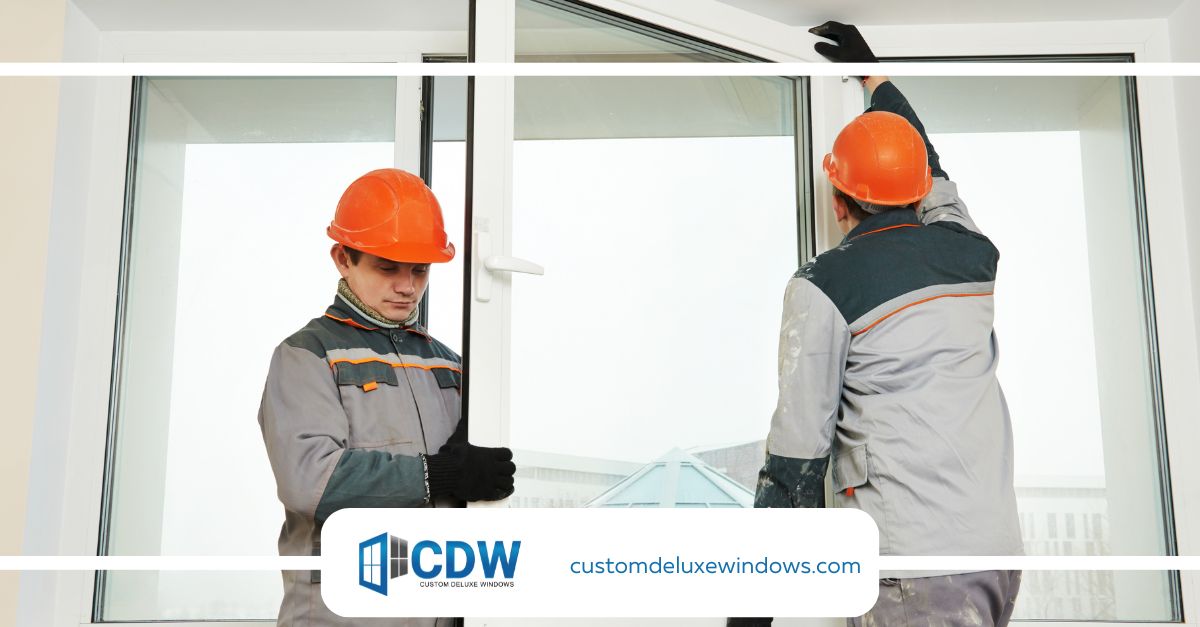
Factory-direct installation is executed by certified, in-house installers. Crews remove old frames without damaging stucco, apply self-adhered flashing, inject low-expansion thermal foam, anchor frames, seal perimeters with high-TSR exterior sealant, and conduct a full operational audit.
Step-by-Step Buying & Installation Journey
- In-Home Digital Consultation & Precision Thermal Assessment: Technicians inspect structural framing, conduct laser measurements down to 1/16th inch, evaluate solar heat load, and establish custom performance parameters.
- Factory Order Entry, CAD Design, and Material Sourcing: Measurement files are uploaded directly to the manufacturing plant. CNC systems cut frame extrusions, apply metallic Low-E coatings, assemble sealed IGUs, and inject argon gas.
- Site Preparation, Floor Protection, and Careful Old Frame Removal: On installation day, in-house crews lay canvas drop-cloths and floor protection film. Technicians score plaster and stucco seams to extract original window frames cleanly without cracking surrounding exterior walls or interior drywall.
- Structural Opening Prep, Flashing, Insertion, Shimming, and Fastening: Technicians clear structural rough openings of old nails and debris, repair sill damage, and apply self-adhered waterproof flashing membranes. Custom frames are inserted, shimmed square and plumb with laser levels, and anchored into structural studs using corrosion-resistant stainless steel fasteners.
- Low-Expansion Foam Insulation, High-TSR Exterior Caulking, and Final Inspection: Technicians fill perimeter gaps with low-expansion polyurethane foam formulated for vinyl frames, preventing frame bowing while creating an air-tight thermal envelope. Exterior trim or flush fins are sealed with high-TSR (Total Solar Reflectance) exterior caulking designed to resist cracking under intense solar exposure.
- Post-Installation Audit, Demonstration, and Site Cleanup: Installers test window hardware, clean glass surfaces, clear site debris, and walk you through operation, maintenance, and locking functions before final sign-off.
Why are factory-trained installers superior to outsourced third-party subcontractors?
Factory-trained window installation crews specialize exclusively in the specific window systems built by their manufacturing facility. This vertical integration offers distinct installation advantages:
Because factory installers work for the same company that builds the windows, they take direct responsibility for structural integrity, water tightness, and smooth hardware operation.
How do technicians prevent damage to exterior stucco, dry-rot, or interior trim?
Improper window removal can cause thousands of dollars in damage to exterior stucco, plaster, and interior wood trim. Factory technicians use specialized extraction procedures tailored to local wall types:
- Stucco Preservation (Flush-Fin Retrofit): Rather than tearing out the embedded nail-flange buried deep within exterior stucco—which cracks the outer finish—technicians cut away the original frame aluminum or wood core, leaving the underlying weather-resistive barrier intact. A custom exterior flush-fin frame slides over the opening, creating an airtight, double-sealed barrier without disturbing the surrounding stucco.
- Full Frame Extraction (Nail-Fin Installation): When stucco is removed or during new construction, technicians carefully score perimeter cut-lines, pull original fasteners, and inspect structural wood sills for hidden water intrusion or dry-rot damage. Any compromised wood studs are cut out and replaced before setting new flashing membranes and window units.
- Interior Protection: Installers use drop cloths, plastic containment barriers, and vacuum attachments to catch masonry dust, glass particles, and old insulation, leaving your home spotless.
What steps are included in the post-installation quality inspection checklist?
Before a project is signed off, the lead installer completes a comprehensive quality checklist:
Transparent Factory Pricing, Financing, & Rebate Stacking
Factory-direct custom vinyl windows generally cost $650 to $1,500 per unit installed, saving homeowners 20–30% compared to retail showrooms. Homeowners can stack factory-direct pricing with local utility rebates and federal Inflation Reduction Act (Section 25C) tax credits up to $600.
How much do custom replacement windows cost when buying direct from the manufacturer?
Factory-direct custom vinyl windows generally range from $650 to $1,500 per unit installed, depending on size, operating style, glass selection, and structural frame enhancements. Eliminating retail showroom commissions and distributor markups keeps total installed costs 20% to 30% lower than middleman retail setups.
Key parameters affecting per-unit costs include:
- Window Dimensions: Larger picture windows, multi-lite slider units, or complex geometric arches require more vinyl extrusion and specialized dual-pane glass matrix thickness.
- Glass Upgrades: Moving from basic Low-E dual-pane glass to laminated acoustic soundproofing matrices or triple-pane units adds 15% to 35% to base glass costs.
- Operating Hardware Mechanics: Fixed picture windows are the most economical. Double-hung, casement, or sliding tilt-turn options require additional internal balance systems, multi-point locks, and moving sash frames.
- Color & Finish Customizations: Standard white and almond vinyl profiles are baseline. Co-extruded exterior color finishes (such as Bronze, Black, or Slate) increase costs by 15% to 25% due to specialized solar-reflective capstocks.
How do factory-direct savings translate into lower long-term energy bills?
Window energy efficiency is determined by how well the unit prevents convective heat transfer and blocks solar radiation heat gain. Old clear-glass single-pane windows allow up to 75% of solar radiation straight into your living space, forcing air conditioning systems to run continuously.
Upgrading to ENERGY STAR® certified windows engineered with argon gas and Low-E3 glass cuts household energy costs:
- HVAC Workload Reduction: Lowering total window Solar Heat Gain Coefficient (SHGC) down to 0.20 blocks up to 80%+ of incoming infrared solar heat, lowering room temperatures during peak summer months.
- Direct Bill Savings: According to U.S. Department of Energy estimates, replacing single-pane windows with ENERGY STAR certified alternatives saves homeowners an average of $126 to $465 per year in power bills, accelerating your initial investment payback period.
- HVAC System Longevity: By reducing peak thermal load spikes inside the home, your air conditioning units run shorter cycles, extending compressor and heat pump lifespans.
What financing options and energy rebates are available for factory-direct purchases?
Homeowners can stack factory-direct pricing with flexible financing options, local utility incentives, and federal tax credits to offset upfront installation expenses:
- Factory-Direct Financing Plans: Custom Deluxe Windows offers direct financing programs including 0% interest for 12–24 months for qualified homeowners, as well as low-fixed-rate long-term plans that spread costs out into manageable monthly payments.
- Federal Inflation Reduction Act (Section 25C Tax Credit): Under the Energy Efficient Home Improvement Credit, homeowners can claim a federal tax credit equal to 30% of the product cost for qualified ENERGY STAR Most Efficient window upgrades, capped at $600 per year.
- Local Utility Rebates: Regional electric power providers (such as PG&E, Southern California Edison, APS, or SRP) offer performance incentives and cash-back rebates when replacing low-efficiency windows with high-performance units (SHGC0.20 and U-Factor0.28).
Warranties & Maintenance: The Power of Single-Source Accountability
Factory-direct purchasing provides single-source lifetime warranty coverage that protects frames, glass seals, hardware, and installation labor under one roof. Simple maintenance—cleaning vinyl tracks and wiping glass with non-abrasive soap—ensures lifetime performance and full warranty protection.
What is a “Single-Source” Lifetime Warranty and why is it superior to retail warranties?
Traditional retail window warranties split protection among multiple businesses, leaving homeowners vulnerable to coverage disputes:
A Single-Source Lifetime Warranty covers the entire system under one roof:
- Vinyl Frame Integrity: Guaranteed against blistering, peeling, cracking, or structural warping under high UV exposure.
- Insulated Glass Seals: Complete coverage against internal seal failure, fogging, and moisture buildup within the argon-filled chamber.
- Hardware Components: Full replacement warranty on stainless steel balances, locks, operators, and corner hinges.
- Installation Workmanship: Coverage protecting against air infiltration, water leaks, or frame alignment issues.
If service is ever required, you make a single call to the factory that manufactured and installed your window.
How do you properly clean and maintain custom factory vinyl windows?
Vinyl replacement windows require minimal upkeep, but regular care helps preserve smooth mechanical operation and weather tightness over time:
Do’s and Don’ts Maintenance Guide:
- DO: Clean frame profiles twice a year using warm water and mild dish soap with a soft microfiber cloth.
- DO: Vacuum dirt, sand, and windblown dust out of bottom sill tracks to prevent window gliders from grinding.
- DO: Inspect exterior weep holes regularly to make sure water drains freely during heavy rain.
- DON’T: Clean Low-E glass using abrasive pad cleaners, wire brushes, or sharp razor blades, which can scratch protective metallic coatings.
- DON’T: Use high-pressure power washers around window perimeters, as intense pressure can rupture exterior caulk beads and force water past weatherstripping.
- DON’T: Apply dark aftermarket window tint films to dual-pane IGUs. Aftermarket tints absorb intense solar thermal energy, generating excessive heat stress that can crack glass panes and void factory seal warranties.
Is a factory-direct window warranty transferable if you sell your home?
Yes. Custom Deluxe Windows warranties are 100% transferable to subsequent homeowners if you sell your property.
A transferable, non-prorated factory warranty provides real tangible value during real estate sales:
- Increases Home Value: Buyers appreciate knowing their window investment is backed by direct factory coverage rather than an expiring limited retail warranty.
- Eliminates Inspection Concerns: Home inspectors check windows for seal failures, fogging, and sticking sashes. A factory-backed transferable warranty gives buyers peace of mind that any future issues will be fully covered.
- Simple Transfer Process: Warranty transfers require a simple registration form submitted within 30 to 60 days of real estate closing, transferring coverage to the new owner for the duration of the lifetime term.