
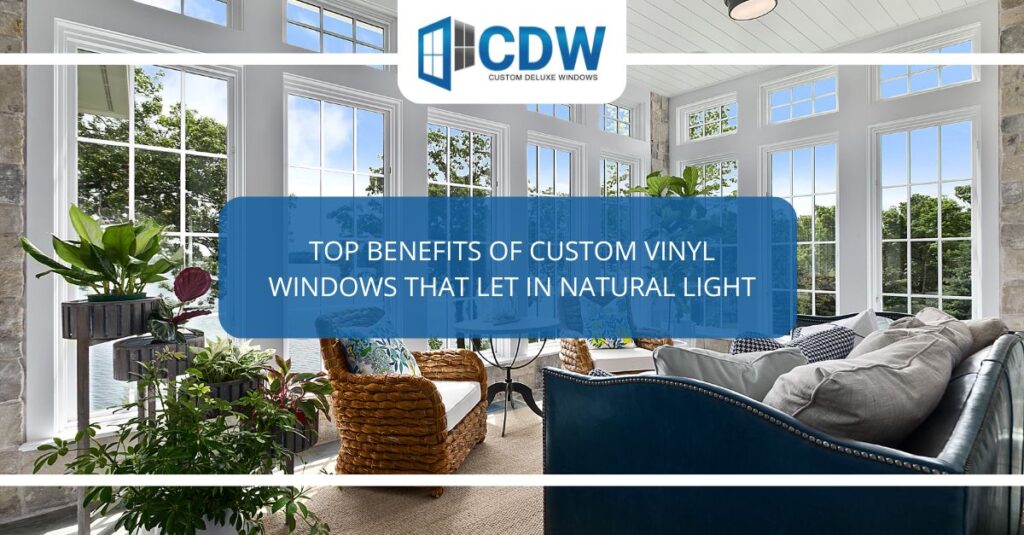
How Do Vinyl Windows Maximize Natural Light While Blocking Mojave Desert Heat?
High-performance natural light vinyl windows in Las Vegas maximize daylight and block extreme desert heat by pairing slim, structurally reinforced framing with spectrally selective low-emissivity (Low-E) glass coatings. In the Las Vegas Valley, these systems achieve a high Visible Light Transmittance (VLT of 0.65–0.72) to allow bright, natural daylight indoors, while maintaining an ultra-low Solar Heat Gain Coefficient (SHGC of ≤ 0.22) and dense argon gas fills to reflect over 95% of heat-generating infrared wavelengths and 99% of damaging UV rays.
Capturing Vegas vistas requires vast expanses of architectural glass. However, building in the Mojave Desert presents extreme solar challenges:
- Over 300 days of harsh, unshaded sunshine annually.
- Summer ambient temperatures consistently exceed 110°F (43.3°C).
- Surface glass temperatures reach 140°F (60°C) during peak afternoon solar exposure.
- Intense ultraviolet (UV) radiation at elevations ranging from 2,000 to over 3,500 feet above sea level.
For decades, the default reaction to this climate was pulling thick blackout curtains, applying dark aftermarket window tint, or installing exterior solar screens. These methods cut solar gain at the cost of darkening living areas, obstructing panoramic views, and forcing reliance on artificial electrical lighting during peak daylight hours.
Modern fenestration engineering eliminates this compromise. By selecting precision-built natural light vinyl windows in Las Vegas, homeowners can flood great rooms, kitchens, and master suites with brilliant natural daylight while locking out searing ambient heat and lowering cooling loads.

The Physics of Desert Daylighting: Visible Light Transmittance vs. Solar Heat Gain
To design an open-concept home that stays cool under intense desert sun, architects rely on three primary optical and thermal performance metrics established by the National Fenestration Rating Council (NFRC):
- Visible Light Transmittance (VLT): The percentage of the visible light spectrum (380 to 740 nanometers) that passes through the glazing assembly. Higher numbers (e.g., 0.65–0.70) indicate brighter interiors, true-to-life color rendering, and clear visual clarity.
- Solar Heat Gain Coefficient (SHGC): The fraction of incident solar radiation admitted through a window, both directly transmitted and absorbed/released inward. In Southern Nevada (IECC Climate Zone 3B), regional energy codes demand an SHGC of 0.25 or lower; high-performance desert units aim for 0.20 to 0.22.
- Light-to-Solar Gain (LSG) Ratio: Calculated as VLTSHGC. The higher the ratio, the more efficient the glass is at admitting visual light while filtering out invisible solar heat. An LSG ratio above 1.50 represents high-performance daylighting; modern spectrally selective packages exceed 2.0.
Through custom window replacement, property owners replace obsolete, heat-conductive aluminum frames and dark, muddy glass tints with high-LSG glazing systems specifically engineered for the Mojave environment.
Spectrally Selective Glass Mechanics: How Micro-Coatings Isolate Light from Heat
Standard tinted glass controls heat absorption by darkening the pane. This reduces heat gain marginally, but it degrades visible light and absorbs thermal energy directly into the glass pane, which then radiates inward into the home.
Spectrally selective glass works differently: it treats every band of the solar spectrum independently using vacuum-deposited microscopic metal coatings.
| Glazing Metric / Spec | Single-Pane Clear (Obsolete) | Standard Dual-Pane Tinted | Spectrally Selective Low-E (Desert Spec) | High-Performance Triple-Pane Low-E |
|---|---|---|---|---|
| Visible Light Transmittance (VLT) | 0.88–0.90[cite: 25] | 0.40–0.50[cite: 25] | 0.65–0.72[cite: 25] | 0.55–0.62[cite: 25] |
| Solar Heat Gain Coefficient (SHGC) | 0.82–0.86[cite: 25] | 0.45–0.55[cite: 25] | 0.20–0.22[cite: 25] | 0.17–0.19[cite: 25] |
| U-Factor (Thermal Conductance) | 1.05–1.15[cite: 25] | 0.48–0.55[cite: 25] | 0.24–0.27[cite: 25] | 0.18–0.21[cite: 25] |
| Light-to-Solar Gain (LSG) Ratio | 1.05[cite: 25] | 0.89[cite: 25] | 3.00–3.27[cite: 25] | 3.05–3.26[cite: 25] |
| UV Block Percentage | ~25%[cite: 25] | 60–75%[cite: 25] | > 95%[cite: 25] | > 99%[cite: 25] |
| Interior Color Clarity | Clear (High Heat)[cite: 25] | Gray/Green Cast[cite: 25] | Neutral / True Daylight[cite: 25] | Neutral[cite: 25] |
The Layered Anatomy of a Desert-Tuned Insulated Glass Unit (IGU)
- Exterior Sacrificial Lite: Clear float glass treated to withstand windborne desert dust and particulate scour during Southern Nevada spring windstorms.
- Triple-Silver Magnetron Sputter Vacuum Deposition (MSVD) Coating: Three individual microscopic layers of silver atoms isolated within metal oxide dielectric stacks applied to Surface #2 (the inside of the exterior pane). These coatings allow short-wave visible light through while reflecting long-wave infrared thermal energy away before it crosses the air gap.
- Argon Gas Insulating Cavity: A 90% pure argon gas fill replacing ambient air between panes. Argon is 38% denser than atmospheric air, dampening convective thermal loops within the IGU.
- Warm-Edge Structural Foam Spacer: Non-metallic, low-conductive perimeter spacers engineered with integrated molecular sieve desiccants. These stop perimeter thermal bridging and prevent internal edge condensation during winter freezes in higher-elevation areas like Mount Charleston foothills and Anthem.
- Interior Optical Lite: Ultra-clear glass maximizing interior luminance without hue distortion, color banding, or chromatic aberration.
Architectural Profiles: Maximizing Daylight Through Structural Vinyl Engineering
To flood a home with natural light, frame profiles must be as narrow as possible. However, the Las Vegas climate places intense mechanical demands on window profiles. Valley installations face seasonal temperature swings from below freezing in January to 115°F (46°C) in July, high wind-load deflections through mountain passes, and continuous solar exposure.
Inferior builder-grade vinyl softens, bows, discolors, and sags under high heat. This often leads suppliers to rely on thick, bulky frame borders that obstruct light and cut down visible glass area by up to 15%.
Bulky Standard Vinyl Frame vs. Precision Slim Architectural Frame
Modern architectural vinyl resolves this challenge through advanced polymer chemistry and internal multi-chamber chamber geometry:
- Titanium Dioxide (TiO2) Compounding: Proprietary non-recycled unplasticized polyvinyl chloride (uPVC) enriched with high concentrations of titanium dioxide. This acts as a permanent, built-in sunscreen that prevents frame yellowing, chalking, and polymer chain breakdown caused by high UV exposure.
- Internal Webbed Multi-Chamber Extrusions: Rather than a hollow shell, high-performance profiles use complex internal chambers. These dead-air pockets act as internal thermal breaks while providing rigid structural webbing that prevents frame twisting under heavy multi-pane glass loads.
- Internal Galvanized Steel Reinforcements: Concealed, roll-formed structural steel channels inserted into critical sash and jamb chambers. These allow for wide spans, floor-to-ceiling picture windows, and heavy sliding patio systems without bulky mullions.
- Fusion-Welded Monolithic Corners: Frame and sash joints are heat-fused at temperatures exceeding 460°F (238°C) into a single, continuous polymer structure. This eliminates the mechanical corner screws, seam gaps, and sealant failures typical of older aluminum frames.
Ultraviolet Spectrum Defense: Protecting High-End Desert Interiors
Daylighting brings an inherent challenge to desert homes: photodegradation. The Southern Nevada elevation, clean desert atmosphere, and high percentage of cloudless days produce significant ultraviolet radiation levels across both UVA (315–400 nm) and UVB (280–315 nm) spectrums.
Direct UV exposure combined with solar heat creates irreversible home damage:
- Bleaching and drying out expensive wide-plank French oak, walnut, and bamboo flooring.
- Fading hand-knotted wool rugs, silk draperies, and custom upholstery.
- Cracking and drying aniline leather furniture.
- Damaging fine art, museum glass prints, and delicate architectural millwork stains.
High-performance vinyl windows equipped with multi-silver Low-E stacks filter out over 95% to 99% of damaging UV wavelengths without casting a dark, mirror-like, or artificial tint over living spaces. The natural desert light entering the home remains neutral, balanced, and safe for high-value interior furnishings.
Microclimate Architectural Considerations Across the Las Vegas Basin
The Las Vegas Valley is not a monolithic climate. Elevation, valley airflow patterns, mountain shade, and urban heat island effects create distinct environmental microclimates that influence window engineering, glass package selection, and installation techniques.
1. West Valley & Spring Mountain Foothills (Summerlin, The Ridges, Red Rock Corridor)
- Elevation: 3,000 to 3,800+ feet.
- Microclimate Profile: Colder winter lows dipping below freezing, high wind gusts traveling off the Spring Mountains, and elevated UV exposure due to thinner atmospheric density.
- Fenestration Priorities: Heavy-gauge structural frame reinforcements to withstand high design pressure (DP) wind ratings, Low-E coatings tuned for both low U-factors during cold winter nights and strong UV protection during clear desert days.
2. Southwest & Henderson Foothills (MacDonald Ranch, Anthem, Inspirada)
- Elevation: 2,200 to 2,900 feet.
- Microclimate Profile: Intense southwestern afternoon solar exposure radiating off barren desert caliche, paired with strong winds from the McCullough Range.
- Fenestration Priorities: Ultra-low Solar Heat Gain Coefficients (SHGC ≤ 0.20) on all west- and south-facing elevations to combat intense afternoon thermal heat gain.
3. Central Basin & Urban Corridors (Downtown, Strip Corridor, Paradise)
- Elevation: Approximately 2,000 feet.
- Microclimate Profile: Severe urban heat island effect, where expansive asphalt, concrete, and high-density commercial structures prevent nighttime radiative cooling.
- Fenestration Priorities: High thermal insulation packages paired with laminated acoustic glazing options to lower interior noise pollution from arterial roadways and airport flight paths.
4. North & Northwest Valley (Centennial Hills, Skye Canyon, Aliante)
- Elevation: 2,400 to 3,200 feet.
- Microclimate Profile: Broad, open desert exposure subject to seasonal dust-laden winds and wide daily temperature swings (often 30°F to 40°F differences between day and night).
- Fenestration Priorities: Multi-point perimeter compression seals and deep frame interlocks to prevent microscopic dust and particulate infiltration during desert windstorms.
Supply Chain Realities: Factory-Direct Precision vs. Broker Models
When outfitting a home with expansive, view-oriented vinyl windows, the manufacturing and distribution model directly impacts structural performance, dimensional precision, and warranty protection.
Sourcing through a factory-direct model like Custom Deluxe Windows gives property owners total control over daylight planning, custom sightline dimensions, and glass specs tailored to their home’s sun angles. Removing distributors and third-party sub-contractors eliminates dimensional miscommunications, reduces lead times, and avoids the common split-liability disputes that arise if an installation failure occurs.
Step-by-Step Installation: Preserving the Stucco Building Envelope
In Southern Nevada, most homes feature synthetic or three-coat exterior stucco over concrete masonry or wood framing. Installing large, view-maximizing windows without damaging this building envelope requires clean surgical execution.
Step 1: Laser-Guided Dimensional and Level Diagnostics
Installers assess existing rough openings with laser levels to identify frame settling, wall movement, or out-of-square conditions common in settled desert framing. Final custom windows are built to match these real-world openings, avoiding forced fits that stress the glass.
Step 2: Clean Surgical Deconstruction
Old aluminum or vinyl units are cut down internally without disturbing exterior stucco borders or damaging interior drywall returns. This approach protects structural framing and prevents unsightly stucco patching lines that rarely match the original wall texture.
Step 3: Membrane Integration and Flashing
Openings are inspected for frame rot, framing settling, and moisture barriers. Installers apply self-adhering butyl flashing membranes around the perimeter. These membranes remain flexible under intense wall temperatures, forming a dependable water and air barrier.
Step 4: Perimeter Structural Anchoring
The slim-profile frame is leveled and secured directly into structural wall framing using non-corrosive, heavy-gauge fasteners placed at engineered stress points. This structural anchoring stabilizes large picture windows and sliding assemblies against high desert wind gusts.
Step 5: High-Temperature Elastomeric Sealant Application
Perimeter joints are sealed with commercial-grade elastomeric polyurethanes or modified silicones. These sealants are rated for extreme desert UV exposure, accommodating frame expansion and contraction cycles without shrinking, cracking, or breaking their weatherseal bond.
Natural Light Vinyl Windows in Las Vegas FAQs
Will large vinyl windows bow, warp, or yellow under the extreme Las Vegas summer heat?
No, modern high-performance vinyl windows will not bow, warp, or yellow if they are built with virgin unplasticized PVC (uPVC) compounded with high concentrations of titanium dioxide (TiO2) and supported by internal chambered webbing. Titanium dioxide acts as a permanent, reflective barrier against UV degradation, while integrated galvanized steel sash reinforcements and fusion-welded corners maintain frame rigidity even under 115°F+ ambient summer temperatures.
How do I maximize natural light without causing my summer air conditioning costs to spike?
To maximize natural light without increasing energy bills, select window glass packages with a high Visible Light Transmittance (VLT of 0.65 or higher) paired with an ultra-low Solar Heat Gain Coefficient (SHGC of 0.22 or lower). This Light-to-Solar Gain ratio lets in plenty of visible illumination while microscopic, spectrally selective Low-E coatings reflect away the invisible infrared heat that drives up cooling bills.
What is the ideal glass specification for west-facing natural light vinyl windows in Las Vegas Valley?
West-facing windows in Las Vegas receive intense afternoon solar radiation and require an insulated glass unit equipped with triple-silver spectrally selective Low-E coatings, an SHGC rating between 0.18 and 0.22, dense argon gas fills, and warm-edge non-metallic spacer systems. This combination blocks more than 95% of incoming thermal heat while preserving sweeping sunset and mountain views.
Why is factory-direct custom sizing so critical for Las Vegas stucco homes?
Factory-direct custom sizing is critical because standard retail off-the-shelf windows rarely match the exact structural rough openings of custom desert stucco homes. Custom building to the exact 1/16th of an inch allows the new frame to slide into place without breaking the exterior stucco, damaging interior drywall returns, or requiring oversized perimeter trim that reduces visible glass area.
Can high-performance vinyl windows also reduce noise from traffic and pool pumps?
Yes, multi-pane vinyl windows provide strong acoustic dampening through multi-chambered frame profiles, airtight compression weatherstripping, and variable glass thickness packages. Adding dissimilar glass thicknesses (such as a 3mm exterior pane paired with a 4mm interior pane) or an acoustic laminated glass layer breaks sound frequency waves, reducing exterior noises from busy thoroughfares, aircraft, and neighborhood pool equipment.
Investing in tailored fenestration balances broad, scenic views with dependable interior climate control. By pairing slim, heat-stabilized vinyl profiles with spectrally selective Low-E glass assemblies, Las Vegas property owners can capture mountain sunrises and skyline lights without taking on unnecessary solar heat or risking UV damage to their home. Built specifically for the Mojave Desert’s environmental demands, modern custom vinyl windows deliver clear views, energy efficiency, and reliable daylighting season after season.